 Skip to content
1-Day, 2-Day, or 3-Day Angkor Itinerary: See more of Angkor by picking the right pass, the right route, and the right hour before your feet give up
Pick the version that fits your time, your energy, and your camera, not just your wish list
A 1-Day, 2-Day, or 3-Day Angkor Itinerary works best when you match the pass to your stamina, not your ambition. One day is fine for Angkor Wat, Bayon, Ta Prohm, and one extra stop, but it is a hard push. Two days is the sweet spot for many people because you can split the famous temples from the quieter outer route. Three days is the best pick for slower mornings, better temple timing, room for Banteay Srei, and time beyond stone walls in Siem Reap. If you want the short version: buy the right temple pass, sort your entry paperwork before you fly, and let the clock shape your temple order.
What matters most
- A 1-day pass costs US$37, a 3-day pass costs US$62, and a 7-day pass costs US$72.
- The 3-day pass is valid over 10 days, which gives you breathing room.
- Angkor is a UNESCO World Heritage Site covering about 400 square kilometres.
- Cambodia e-Arrival is free and should be filed within 7 days before arrival.
- The official tourist e-Visa fee is US$30, with a stated 3 business day process.
Why the smart money usually lands on the 3-day pass
A 1-Day, 2-Day, or 3-Day Angkor Itinerary is not just about money. It is about how you feel at 1:30 p.m. after stairs, sun, and stone. The math alone is telling: the jump from US$37 to US$62 buys you far more room to breathe, retry sunrise, split the Small Circuit from the Grand Circuit, and add places like Preah Khan, Neak Pean, or Banteay Srei without the usual panic. If you have only one full day, fine, go hard and go early. If you have two or three days in Siem Reap, the 3-day pass is often the calmer and better call.
There is another reason. Angkor is not one temple. It is a huge zone with major shrines, reservoirs, roads, and living villages inside the park. UNESCO puts the site at about 400 square kilometres, and that scale matters once you start moving between stops. What looks close on a map can feel very far in the heat.
If you ask me for one straight answer, here it is: most first-time visitors should not cram Angkor into one rushed blur. A good 1-Day, 2-Day, or 3-Day Angkor Itinerary should be built around heat, crowd flow, and temple order, not around a giant checklist. You will enjoy more, remember more, and get better photos if you stop trying to “do Angkor” all at once. And yes, the right pass can save your whole trip.
The fast answer: which 1-Day, 2-Day, or 3-Day Angkor Itinerary fits you?
If you have only one full day
Pick the icons and do not pretend you can do everything. Your 1 day Angkor itinerary should look like this:
- Angkor Wat at sunrise if that is non-negotiable for you.
- Interior visit after sunrise, once the first photo rush settles.
- Ta Prohm before the late-morning jam, or after 3 p.m.
- Angkor Thom with Bayon and the South Gate.
- One extra stop, maybe Banteay Kdei or Pre Rup.
This version works. But it is a long day. You will walk a lot, move fast, and feel the rush by noon.
If you have two days
This is where a 2 day Angkor tour starts to make sense. Day one can hold the famous names. Day two can hold the quieter route and the finer carving work.
A simple split is this:
- Day 1: Angkor Wat, Ta Prohm, Angkor Thom, Bayon
- Day 2: Pre Rup, Banteay Srei, Neak Pean, Preah Khan, sunset
That split is good because it separates the crowd magnets from the wider loop. It also gives you one sunrise shot without making the whole trip feel like a military drill.
If you have three days
For most first trips, this is the winner. A 1-Day, 2-Day, or 3-Day Angkor Itinerary becomes far better on day three because your body catches up with your wish list. You can rest at midday, return for golden light, and still add local life in Siem Reap.
A strong 3-day shape looks like this:
- Day 1: Sunrise at Angkor Wat, Ta Prohm, Angkor Thom, Bayon
- Day 2: Grand Circuit, Pre Rup, Preah Khan, Neak Pean, Ta Som, Banteay Srei
- Day 3: Slow morning, then village time, floating village, Beng Mealea, or a second Angkor Wat session in softer light
If you are weighing a 3 day Angkor pass, this is where it earns its keep.
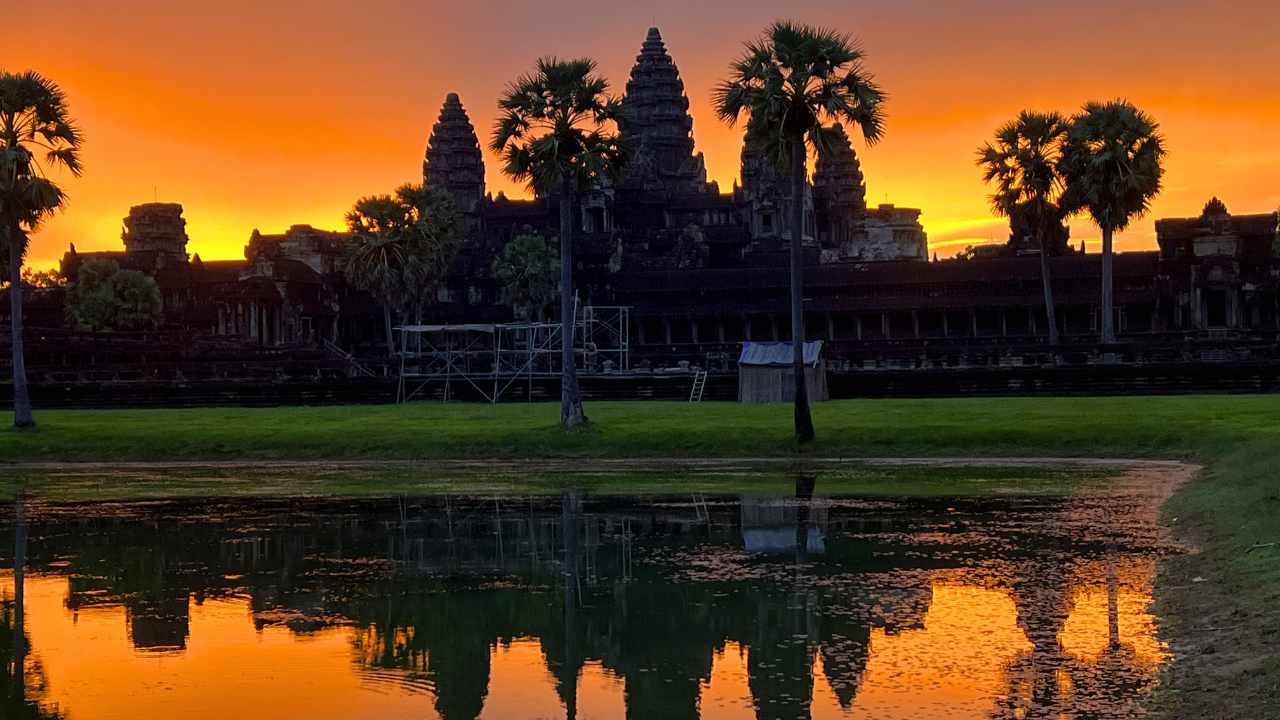
Build your 1-Day, 2-Day, or 3-Day Angkor Itinerary around the clock, not just the map
This is the bit many first-timers miss.
The Small Circuit is the tight cluster of big names. It is the right call when your time is short. The Grand Circuit feels wider, calmer, and often less jammed. So the best Angkor trip planning move is not “What temple next?” but “What temple at what hour?”
Here is the working rule I use:
- Before 8:30 a.m.: Angkor Wat, Ta Prohm, or another big-name stop
- Late morning: Bayon, terraces, indoor galleries, shaded walks
- Midday: break, food, hotel pool, nap, or a quieter indoor section
- After 3:30 p.m.: Angkor Wat again, Pre Rup, or outer-route temples
- After 5:00 p.m. the day before: buy your pass if you want a sunset look and a full first day after that
That last one matters. The official ticket system has long offered a useful trick: buy after 5:00 p.m., and you can often catch sunset without burning your next full temple day.
The admin steps that save you stress before you land
A 1-Day, 2-Day, or 3-Day Angkor Itinerary starts before you reach Siem Reap.
Do these three jobs first:
- File your official Cambodia e-Arrival card before your flight within 7 days of entry. It is free.
- If you need a visa, use the official Cambodia e-Visa application portal. The tourist visa fee shown there is US$30, with a 3 business day process.
- Check the official Angkor Enterprise ticket portal for current pass rules and buying options.
Bring your passport. Keep your pass dry. Dress with shoulders and knees covered for temple entry. And please, do not burn your energy too early. Angkor rewards pacing.
What most people still get wrong about temple order
They do Angkor in the same order as everyone else.
So if you want fewer people in your frame, flip the day when you can. Go to Ta Prohm very early or later in the afternoon. Let Bayon sit in the middle of the morning. Save one soft-light return for Angkor Wat. And if you are on a 1-Day, 2-Day, or 3-Day Angkor Itinerary, do not feel bad about skipping a few minor stops. Better three temples you feel than nine you barely recall.
A few facts help shape that call. Bayon carries more than 200 carved faces. The South Gate of Angkor Thom is lined by 54 gods on one side and 54 demons on the other. Ta Prohm once held 2,740 monks. These are not tiny, quick stops. They take time.
Want it done for you? These in-house picks match real travel styles
Small group 2-day Angkor sunrise and sunset temple plan
This is a good fit if you want the classic two-day shape without hiring a full private setup. Day one goes outward to Pre Rup, Banteay Srei, Neak Pean, and Preah Khan, then ends with sunset. Day two starts before dawn for Angkor Wat, then moves into Bayon, the terraces, and Ta Prohm. It is a clean answer for anyone who wants a ready-made 1-Day, 2-Day, or 3-Day Angkor Itinerary but only has two days free.
Private 2-day Angkor sunrise, sunset, and quieter temple route
If pace matters more than price, this private-leaning route is easier on the nerves. It keeps the sunrise and the major temples, but day one also folds in a rice-field sunset drink near Siem Reap. You get the famous stone, yes, but you also get breathing room. For couples or families, that balance often feels right.
Siem Reap green local-life and temple plan
This one is for travelers who want Angkor plus real local texture. It pairs temples with APOPO, village time, Khmer cooking, and a woman tuk-tuk driver. I like this mix because it stops Angkor from becoming only a photo mission. If your Angkor trip planning includes people, food, and a softer pace, this route earns a look.
Siem Reap 3-day slow travel temple and village route
This is the best in-house match for travelers who hate rushed days. Early temple hours, midday rest, Angkor Wat in golden light, Chong Khneas, and Beng Mealea all sit inside one slower three-day flow. It is the shape I would point to for many first-time visitors choosing a 1-Day, 2-Day, or 3-Day Angkor Itinerary and leaning toward three days.
Good reads if you want sharper Angkor trip planning
Angkor route guide for Small Circuit and Grand Circuit timing
Read this if you want the route logic behind the temple order. It lays out how to split the big names from the outer loop, and it helps you see why one day inside the park can feel so rushed. Very handy before you lock your pass.
Trips to Angkor Wat planning guide for first-time visitors
This one is strong on weather, heat, crowd flow, dress rules, and pass choice. It is useful if you are still stuck on the one-day versus three-day call. Short answer: most people are happier when they stop trying to sprint.
Your next move
My own view? A 1-Day, 2-Day, or 3-Day Angkor Itinerary should leave you with some energy still in the tank. I would rather see fewer temples well than rush through famous names and spend the last hours half-dazed in the sun. So pick your pass honestly, sort your entry paperwork now, and choose temple order by hour, not by ego. If you want help turning this into a trip that fits your hotel, flight time, pace, and budget, use the custom Cambodia trip planning page. Start there, then make Angkor feel like your trip, not somebody else’s checklist. That is the whole point.