Koh Ker Authentic Temple Exploration – Walk giant stone towers in total peace with Koh Ker without the tourist masses and keep every moment to yourself!
Skip the lines and feel real silence with Koh Ker authentic temple exploration at full speed. No crowds. No rush. Just raw paths, wild towers, and wide space where your camera gets clean shots every time.
Looking for Koh Ker authentic temple exploration that actually delivers on the “no crowds” promise? This 10th-century pyramid temple complex sits 2.5 hours from Siem Reap and offers what Angkor Wat used to be: silence, space, and stone towers you’ll have almost to yourself. Koh Ker without the tourist masses means you can photograph temples without waiting for strangers to move, climb ancient stairs without queuing, and actually hear the jungle around you. This guide covers everything: which tours bundle transport and tickets, what the Koh Ker authentic temple exploration experience actually feels like, entrance fees, best times to visit, and why 180+ temples reclaimed by jungle beat standing elbow-to-elbow at sunrise. Read on if you’re done with mass tourism and ready for Cambodia’s real archaeological treasure.
Everything You Need to Know About Koh Ker Authentic Temple Exploration
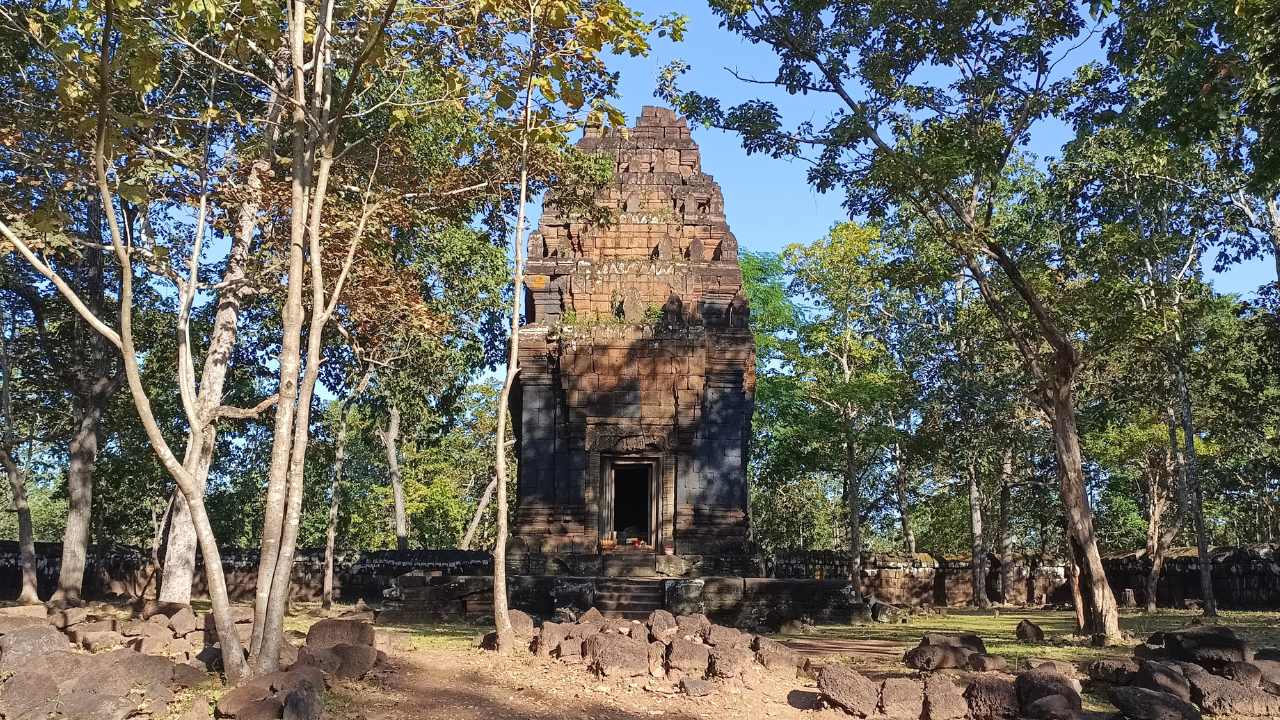
Koh Ker authentic temple exploration involves visiting Cambodia’s most underrated archaeological site, a former Khmer Empire capital located 120 kilometers northeast of Siem Reap. This remote Angkor temple complex features over 180 structures spread across jungle terrain, crowned by the magnificent 36-meter Prasat Thom pyramid that you can actually climb without fighting crowds. The experience offers genuine solitude, dramatic photo opportunities, and direct connection with ancient Khmer ruins in their natural jungle setting.
Key Features of Koh Ker Authentic Temple Exploration:
-
The Prasat Thom Pyramid: Cambodia’s only ancient stepped pyramid, rising seven tiers to 36 meters. You can climb to the top for panoramic jungle views, often with zero other visitors in sight. The architecture rivals Central American pyramids and represents unique Khmer engineering from the 10th century.
-
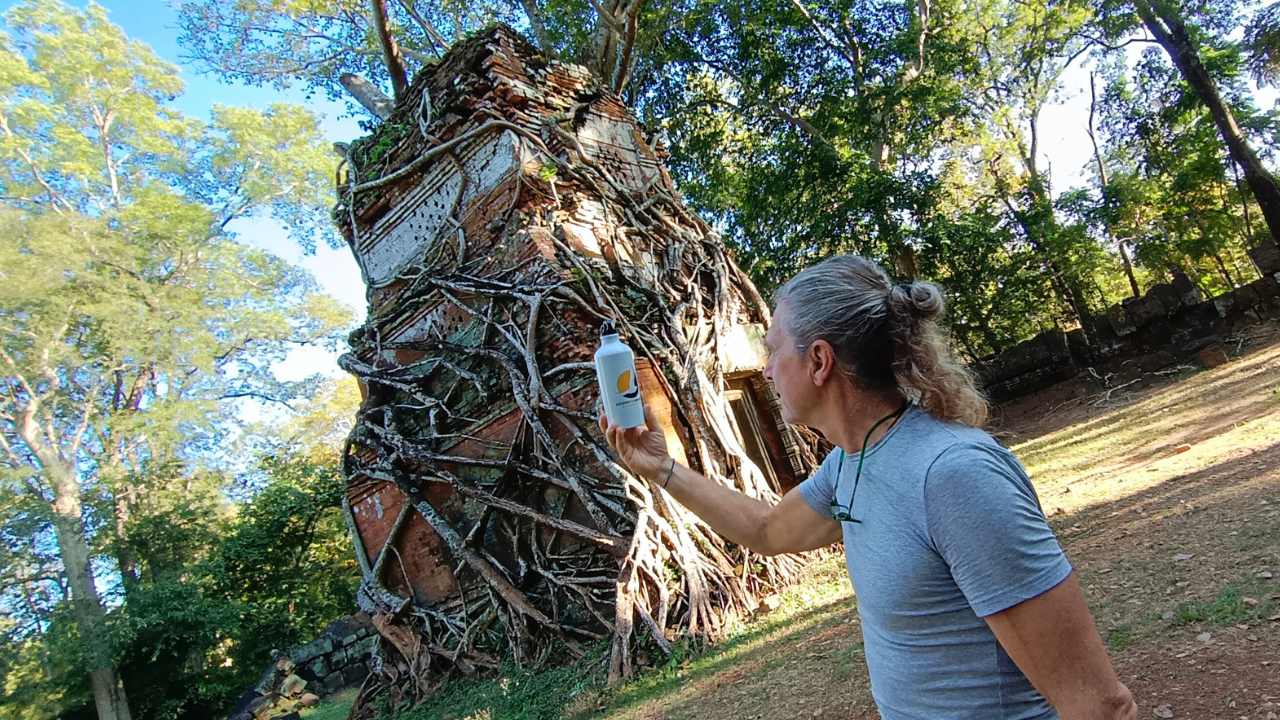
180+ Temple Structures: Unlike Angkor Wat’s concentrated layout, Koh Ker spreads temples across several kilometers. You’ll explore Prasat Krahom (Red Temple), Prasat Chen, Prasat Balang, and dozens of smaller shrines, most partially consumed by jungle vegetation.
-
Genuine Solitude: While Angkor Wat sees 2.5 million visitors annually, Koh Ker receives roughly 50,000. You’re genuinely experiencing Koh Ker without the tourist masses, not just fewer crowds but actual empty temples for minutes at a time.
-
Jungle Atmosphere: This isn’t manicured temple grounds. Tree roots crack stone foundations, vines drape doorways, and you’ll hear birds instead of tour guides with megaphones. The jungle temple Cambodia experience here feels like actual archaeological exploration.
-
Photography Paradise: Clean shots without photobombing strangers. Golden hour light filtering through jungle canopy. Ancient stone textures without safety ropes and “do not touch” signs blocking your frame. This is what your Cambodia photo album deserves.
-
Historical Significance: Briefly served as the Khmer Empire capital under King Jayavarman IV (928-944 CE). The architectural experimentation here influenced later Angkorian styles, making it crucial for understanding Khmer civilization’s development.
Tour Options for Koh Ker Authentic Temple Exploration:
-
Full-Day Combo Tours: The most popular option pairs Koh Ker with Beng Mealea temple in a single day trip. Tours include air-conditioned transport, experienced drivers who know the rough roads, entrance fees, and English-speaking guides who bring the archaeology to life. This Koh Ker and Beng Mealea Jungle Explorer tour handles all logistics while you focus on exploration.
-
Private Tours: For photographers or history buffs wanting extended time at specific temples, private tours offer flexible timing and personalized pacing. You control when to leave and how long to spend at each structure.
What to Expect During Your Visit:
Your journey starts with a 2.5-hour drive from Siem Reap through rural Cambodian countryside. Roads improve significantly in recent years but still require experienced drivers. You’ll arrive at the ticket office, pay the entrance fee (separate from Angkor pass), then drive into the complex.
Most visitors spend 2-3 hours exploring. You’ll park at the main Prasat Thom pyramid first (the star attraction), then drive short distances between other major temples. Expect uneven stone paths, stairs without railings, and minimal facilities. Bring water, snacks, and sun protection because amenities are basically nonexistent.
The experience feels like stepping onto an active archaeological site. You’re not shuffling through velvet-roped routes. You’re climbing ancient stairs, touching 1,000-year-old carvings, and occasionally having entire temple complexes to yourself. That’s the peaceful archaeological site magic that makes the drive worthwhile.
Starting Points and Access:
All Koh Ker authentic temple exploration trips originate from Siem Reap, Cambodia’s tourism hub. You cannot easily visit as a day trip from Phnom Penh (6+ hours each way). Most tours depart between 7:00-8:00 AM to maximize time at the temples and return before dark.
The complex itself has no accommodation, restaurants, or shops. Everything you need comes with you from Siem Reap, which is why organized tours make practical sense for most travelers.
Things to Consider Before Booking:
-
Physical Fitness: Climbing Prasat Thom requires navigating steep, ancient stairs. If you have mobility issues, you can still enjoy ground-level temples but will miss the pyramid’s highlight.
-
Time Investment: Round-trip transport eats 5 hours of your day. If you only have 2-3 days in Cambodia, Angkor Wat might be a better use of limited time. But if you’re spending 4+ days in Siem Reap, Koh Ker adds crucial variety.
-
Photography Priorities: If Instagram-worthy shots matter, Koh Ker delivers what Angkor Wat’s crowds destroy. But if you need iconic, instantly recognizable landmarks, Angkor Wat wins.
-
Budget: Between transport, guide, and entrance fees, expect to invest $40-80 per person depending on tour type. That’s more expensive per hour than the Angkor pass, but you’re paying for exclusivity.
Other Options to Pair With Koh Ker:
-
Beng Mealea Temple: Another jungle ruins exploration site 60km from Siem Reap, famous for massive tree roots consuming temple structures. Most tours combine both in one day since they’re in the same direction.
-
Preah Vihear Temple: A mountaintop temple complex near the Thailand border, offering dramatic clifftop views. Can be combined with Koh Ker for adventurous travelers willing to do very long days.
Important Information to Remember:
The Koh Ker temple entrance fee is separate from the Angkor Archaeological Park pass. You’ll pay $15 USD per person at the site entrance (cash only, US dollars or Cambodian riel accepted). This fee supports ongoing conservation efforts at this UNESCO World Heritage candidate site.
If you’re pairing with Beng Mealea, you’ll pay an additional entrance fee there as well. Check current Beng Mealea entrance fee 2025 pricing before your trip to budget accurately.
Tours typically include all entrance fees in the quoted price, but always confirm what’s covered before booking. Some budget operators quote low prices then surprise you with excluded fees.
Booking in advance during high season (November-February) ensures vehicle and guide availability. Contact Journey Cambodia directly for current availability and to customize your temple exploration experience.
What Makes Koh Ker Authentic Temple Exploration Different From Every Other Temple Run in Cambodia
So you’ve seen the photos. Angkor Wat at sunrise with 3,000 other people holding iPhones above their heads, right? That’s beautiful and all, but it’s also exhausting. You spend more time navigating human traffic than actually experiencing ancient architecture.
Koh Ker authentic temple exploration flips that script entirely.
Here’s what “different” actually means in concrete terms: On a typical morning at Angkor Wat’s main temple, you’re sharing space with thousands of visitors. At Koh Ker’s Prasat Thom pyramid during that same morning? You might see 15 people. Total. Across the entire complex.
The Koh Ker temple complex served as the Khmer Empire’s capital for only about 20 years in the 10th century before King Jayavarman IV’s successors moved the power center back to Angkor. That brief moment in history means Koh Ker developed its own architectural personality: more experimental, more vertical, more pyramid than the later Angkorian style.
And because it’s 120 kilometers from Siem Reap on roads that only recently improved, it’s remained genuinely off the beaten path Cambodia even as Angkor Wat turned into Southeast Asia’s most visited archaeological site.
What does “authentic” mean when everything here is legitimately ancient? It means the experience matches what you imagined temple exploration would feel like before you arrived in Cambodia and found Angkor Wat surrounded by coffee stands and tour buses.
At Koh Ker, you’ll hear your own footsteps on stone stairs. You’ll photograph temple facades without waiting for groups to clear the frame. You’ll sit in doorways contemplating ancient Khmer ruins without someone’s guided tour commentary bleeding into your moment.
Koh Ker without the tourist masses isn’t marketing language. It’s Tuesday afternoon reality.
The temples here show their age differently too. Where Angkor Wat gets continuous conservation and restoration (necessary given the visitor pressure), Koh Ker’s structures retain more of their weathered, jungle-consumed character. That feels more authentic to many travelers, even if “authentic” technically means “less maintained.”
You’re not choosing between good and bad here. You’re choosing between iconic and undiscovered, between UNESCO World Heritage poster child and Cambodia’s secret that’s slowly getting out.
Quick Reality Check: Koh Ker authentic temple exploration gives you what travel brochures promise but rarely deliver: genuine solitude among ancient ruins. The 36-meter Prasat Thom pyramid? You might climb it alone. That’s not marketing spin, that’s Tuesday morning at Cambodia’s most underrated temple complex.
The Prasat Thom Pyramid: Your Main Event at Koh Ker Authentic Temple Exploration
Let’s talk about why you’re really going to Koh Ker: the pyramid.
Prasat Thom pyramid rises 36 meters (about 118 feet) in seven distinct tiers above the jungle canopy. It’s Cambodia’s only ancient pyramid structure, and yes, you can climb to the top. The stairs are steep, the stones are worn smooth by centuries, and there’s no safety railing holding your hand on the way up.
But when you reach the summit platform, you’re standing where Khmer royalty performed ceremonies a thousand years ago, with 360-degree views of unbroken jungle stretching to the horizon.
The architecture here breaks from typical Khmer temple design. Most Angkorian temples rise gradually through concentric galleries. Prasat Thom says “screw that” and goes straight vertical in a stepped pyramid form more reminiscent of Mesoamerican structures than anything else in Cambodia.
King Jayavarman IV apparently wanted to make a statement when he moved the capital to Koh Ker, and this pyramid was that statement: bold, massive, impossible to ignore.
The climb takes about 5-10 minutes depending on your fitness and comfort with heights. The stones are uneven, some steps are taller than others, and you’re using your hands in places. If you have knee issues or serious fear of heights, you might want to admire it from below (which is still spectacular).
But if you can make the climb? Do it. The top platform offers the single best view in the entire Koh Ker temple complex, and on most days, you’ll have minutes of solitude up there to actually absorb the experience.
Photography from the summit captures the pyramid’s surrounding temples emerging from jungle, the ancient reservoir system, and the sheer scale of this forgotten capital. Morning light (8:00-10:00 AM) provides the best conditions, though afternoon side-lighting creates dramatic shadows across the stone tiers.
The pyramid originally had a golden lingam (phallic symbol representing Shiva) at its summit, long since removed or destroyed. Archaeological evidence suggests the entire structure was plastered and possibly painted white, which would have made it visible for kilometers across the ancient landscape.
Now it’s weathered laterite and sandstone, with vegetation claiming edges and corners, looking exactly like what Western travelers picture when they imagine jungle temple Cambodia exploration.
This is your main event. The other 180+ temples are fascinating, but Prasat Thom is the reason you drove 2.5 hours from Siem Reap.
180+ Temples and Zero Tour Buses: The Real Story of Koh Ker Without the Tourist Masses
Numbers tell part of the story: Angkor Archaeological Park receives about 2.5 million visitors per year. Koh Ker? Maybe 50,000. That’s 50 times fewer people spread across a complex that’s geographically larger and more dispersed.
But raw statistics don’t capture what Koh Ker without the tourist masses actually feels like on the ground.
You’ll drive between temple clusters on dirt roads through actual jungle. Not landscaped parks with “jungle ambiance,” but working forest where locals harvest resin and hunt. The temples emerge from vegetation like they’ve been waiting centuries for you specifically to show up.
The major structures beyond Prasat Thom include:
Prasat Krahom (Red Temple), named for its red sandstone construction, features intricate carvings still sharp enough to photograph details. You might spend 15 minutes here alone with your guide, discussing lintel iconography without other tourists interrupting.
Prasat Chen (“Chinese Temple,” though nothing about it is Chinese) offers a cluster of smaller shrines connected by ancient causeway. Tree roots embrace stone blocks here in that classic jungle ruins exploration aesthetic that photographers chase.
Prasat Balang sits further into the forest, requiring a short walk through proper jungle trail. Many day-trippers skip this one, meaning you definitely shouldn’t.
Prasat Leung and dozens of smaller shrines scatter across the complex, most unnamed on tourist maps, many completely empty of visitors.
The “uncrowded” promise means different things to different travelers. If you’re coming from Angkor Wat where you literally queue to photograph certain angles, then yes, Koh Ker feels deserted. You’ll shoot temples without strangers in frame. You’ll climb stairs without waiting your turn. You’ll explore interiors with only your group present.
But understand that Koh Ker is steadily gaining popularity. Five years ago, you might have seen 5 other tourists all day. Now it’s more like 20-30 on a busy high-season morning. That’s still extraordinary compared to Angkor Wat’s thousands, but it’s not 1990s-explorer-discovering-lost-temples either.
The best thing about Koh Ker authentic temple exploration isn’t zero tourists (that’s unrealistic), it’s the space. Even when other groups are present, the complex is large enough that you’re rarely in each other’s way. You rotate through temples naturally, and everyone gets their unobstructed moments.
Wildlife adds another layer of authenticity. You’ll hear (and possibly see) jungle birds, monitor lizards sunning on stones, monkeys in trees, butterflies the size of your hand. This isn’t a zoo exhibit version of Cambodia. It’s functioning ecosystem that happens to contain ancient temples.
That’s what makes it real.
Most travelers book the Koh Ker and Beng Mealea Jungle Explorer tour which handles all logistics: comfortable SUV or minivan with air conditioning, experienced driver who knows the roads and current conditions, English-speaking guide who brings archaeological context, and entrance fees bundled into one price.
The tour route typically combines both Cambodia hidden temples in one long day: Beng Mealea first (closer to Siem Reap), then Koh Ker, returning by late afternoon. This pairing makes geographic sense and gives you maximum jungle temple exposure per day invested.
Best Time for Koh Ker Authentic Temple Exploration (Season, Weather, and Crowd Patterns)
Cambodia’s dry season (November through March) offers the most comfortable conditions for Koh Ker authentic temple exploration. Temperatures stay somewhat manageable (hot but not brutal), rainfall is minimal, and roads remain passable without 4WD requirements.
November through February represents peak season: weather is best, but visitor numbers also hit their highest (still tiny compared to Angkor Wat, but relatively busy for Koh Ker). If you’re visiting during these months, aim for weekday trips when possible.
March through May brings serious heat. We’re talking 38-40°C (100-104°F) afternoons that make climbing Prasat Thom genuinely exhausting. But you’ll see even fewer tourists, and morning visits (arriving by 9:00 AM) remain tolerable.
June through October is wet season. Roads can get muddy, afternoon rainstorms are common, and some days the temples close if conditions get dangerous. But the jungle turns incredibly lush and green, dramatic clouds create spectacular photography lighting, and you’ll have the complex almost to yourself.
I’ve talked to photographers who swear wet season offers the best shots: moody skies, rain-slicked stones reflecting light, and vegetation so thick you can barely see through it. Just bring rain gear and flexible expectations if storms cancel your visit.
Time of day matters more than season for photography and comfort:
- 8:00-10:00 AM: Best light, coolest temperatures, and you’ll beat most day-trippers who depart Siem Reap later
- 10:00 AM-2:00 PM: Harsh overhead sun, maximum heat, but also emptiest temples as most tours leave by midday
- 2:00-4:00 PM: Beautiful side-lighting but you need to start your return drive by 3:00-3:30 PM to reach Siem Reap before dark
Most tours arrive at Koh Ker between 10:30 AM and 12:00 PM, so if you’re going independent or booking private tour, consider arriving earlier (8:00-9:00 AM) for maximum solitude.
Crowd “patterns” is almost funny to discuss at Koh Ker without the tourist masses, but yes, they exist. Chinese New Year, Christmas/New Year holidays, and Cambodian national holidays bring slightly more visitors. But “crowded” at Koh Ker means maybe 50 people instead of 20.
Your biggest weather concern is afternoon thunderstorms during wet season. If you’re climbing Prasat Thom pyramid when lightning starts, that’s genuinely dangerous. Listen to your guide’s weather judgment and don’t push for “just five more minutes” if they say it’s time to leave.
The Koh Ker temple complex isn’t going anywhere. You can always come back. But you can’t come back if lightning strikes you on top of a 36-meter stone pyramid.
What “Authentic” Really Means: Archaeological Context of Koh Ker Temple Complex
History makes temples meaningful, not just photogenic. So let’s talk about why the Koh Ker temple complex matters beyond being uncrowded.
In 928 CE, King Jayavarman IV moved the Khmer Empire’s capital from Angkor to Koh Ker (then called Lingapura or Chok Gargyar). Why? Probably political conflict with rival royal factions, though historians debate specifics. For roughly 20 years, this remote location served as the empire’s power center.
That brief period spawned intense architectural experimentation. Without established Angkorian traditions to follow, builders tried new forms. Hence the unique pyramid structure (nothing else like it in Khmer architecture), aggressive vertical emphasis, and experimental engineering techniques.
When Jayavarman IV’s son lost power in 944 CE, the capital moved back to Angkor and Koh Ker was largely abandoned. Temples fell into jungle, royal inscriptions stopped, and the site faded from political importance.
That abandonment preserved Koh Ker in its 10th-century state. While Angkor temples got rebuilt, expanded, and modified over centuries, Koh Ker stayed frozen in time. What you see represents pure early Angkorian period architecture without later additions.
The Prasat Thom pyramid specifically functioned as a state temple (Devaraja cult center) where the king’s divine authority was ritually confirmed. The summit originally held a massive lingam (Shiva symbol) called Tribhuvanesvara, around which ceremonies focused. Inscriptions describe the lingam as being adorned with gold, precious stones, and elaborate decoration.
Archaeological evidence suggests Koh Ker’s temples once featured extensive plaster coating and possibly paint. The weathered laterite and sandstone we see today would have been covered in smooth white or colored plaster creating very different visual effect. Imagine these structures gleaming white above jungle canopy.
The site’s reservoir system (barays) demonstrates sophisticated water management engineering. The ancient Khmer redirected rivers to fill massive artificial lakes that supported agriculture and provided ritual bathing locations.
Modern conservation at remote Angkor temples like Koh Ker faces challenges that high-profile sites don’t: limited funding, difficult access for materials and workers, ongoing looting risk, and lower international attention. Several temples show recent damage from stone theft, though security has improved in recent years.
UNESCO tentatively listed Koh Ker as World Heritage Site candidate in 2020, but full inscription hasn’t occurred yet. That designation would bring more conservation resources but also likely increase visitor numbers.
You’re visiting at a unique moment: famous enough that access is easy and secure, but still uncrowded enough to feel like your personal exploration of ancient Khmer ruins. That window might not stay open forever.
Beng Mealea Entrance Fee in 2025 – What You’ll Really Pay (and What’s Not Included)
Why Koh Ker Without the Tourist Masses Is Cambodia’s Best-Kept Temple Secret
So after all that, why does Koh Ker authentic temple exploration matter?
Because it delivers what Cambodia’s tourism marketing promises but Angkor Wat can no longer provide: genuine connection with ancient history in an uncrowded, atmospheric setting that feels like exploration rather than sightseeing.
You’re not shuffling through velvet-roped routes here. You’re climbing ancient stairs that royal priests climbed a millennium ago. You’re touching stones that workers carved by hand with tools we’d consider primitive. You’re standing in doorways where nobody else is standing, photographing temples without strangers in frame, and actually hearing jungle sounds instead of tour guide commentary.
The Prasat Thom pyramid alone justifies the 2.5-hour drive. Nothing else in Cambodia offers that combination of climbable height, architectural uniqueness, and crowd-free access. When you’re standing on that summit platform with jungle stretching to the horizon and maybe three other people sharing the entire complex with you, you understand why travelers who’ve visited both Angkor Wat and Koh Ker consistently rate Koh Ker as their more memorable experience.
This isn’t about Angkor Wat being “bad.” Angkor Wat is objectively one of humanity’s greatest architectural achievements. But it’s also overrun with crowds that destroy the contemplative experience ancient temples deserve.
Koh Ker offers what Angkor Wat was before mass tourism arrived: space to breathe, silence to think, and temples that feel like they belong to history rather than to tourism industry.
Who is Koh Ker perfect for?
- Photographers who need clean shots without photobombing strangers
- History buffs wanting depth over breadth
- Travelers on their second (or third) Cambodia trip who’ve already done Angkor Wat
- Anyone exhausted by overtourism and seeking authentic experiences
- Adventure travelers who prefer off the beaten path Cambodia over famous landmarks
Who should stick with Angkor Wat instead?
- First-time Cambodia visitors with only 2-3 days (Angkor Wat’s iconic status matters)
- Travelers who need easy access and full facilities
- People with mobility limitations (Angkor Wat has better accessibility)
- Anyone wanting the most famous, internationally recognized temples
The future of Koh Ker hangs in interesting balance. It’s gaining popularity (visitor numbers increase yearly), but remoteness and rough roads keep it from ever reaching Angkor Wat’s crowds. The pending UNESCO World Heritage inscription could change dynamics, though probably gradually.
You’re visiting at a golden moment: accessible enough to reach comfortably, but still uncrowded enough to feel like your personal exploration. That window might narrow in coming years as Cambodia’s tourism infrastructure improves and more travelers learn about Cambodia hidden temples beyond Angkor.
But for now? Koh Ker remains Cambodia’s best-kept temple secret. The peaceful archaeological site where you can still experience what temple exploration felt like before it became a mass-market tourist activity.
That’s worth protecting. That’s worth experiencing before it changes.
That’s why you should go.
Your next steps are simple:
Book your tour through the Koh Ker and Beng Mealea Jungle Explorer option that handles logistics while you focus on actually experiencing these ancient Khmer ruins. Check current entrance fee details so you’re budgeting accurately. Then contact Journey Cambodia directly to confirm availability for your travel dates and ask any specific questions about customizing the experience.
Go midweek if possible. Arrive early. Climb the pyramid. Sit in ancient doorways. Take photos that don’t include strangers. Feel what temple exploration should actually feel like.
Koh Ker without the tourist masses isn’t a marketing line. It’s the reality you’ve been looking for since you started planning your Cambodia trip.
Relevant Resources
- UNESCO World Heritage Tentative List: Official documentation of Koh Ker’s archaeological significance and conservation status
- Cambodian Ministry of Culture and Fine Arts: Current regulations, entrance fees, and visitor guidelines for remote temple sites
- Archaeological Survey of Koh Ker Research: Academic papers detailing the site’s 10th-century history and architectural significance under King Jayavarman IV