Cooking Class Siem Reap Countryside
This cooking class Siem Reap countryside trip takes you off the tourist road. You shop at a local market. You cook with fresh farm food. You sit, eat, laugh, and feel like a guest, not a visitor.
A cooking class Siem Reap countryside experience teaches you real Khmer recipes in actual village settings, not sterile cooking schools. You’ll start at local markets where villagers shop (not tourist markets), select fresh ingredients with your guide, then cook 3-4 traditional dishes in a family home or outdoor kitchen using wood fires and traditional tools. Classes last 4-5 hours, cost $35-45 per person, and include market tour, hands-on cooking instruction, all ingredients, the meal you prepared, recipes to take home, and often finish with sunset viewing at nearby rice fields like Baitang. The cooking class Siem Reap countryside format connects you to real Cambodian food culture through authentic locations, family interactions, and farm-fresh ingredients picked the same morning you cook them.
Your Complete Guide to Cooking Class Siem Reap Countryside
A cooking class Siem Reap countryside experience typically involves traveling to village areas outside central Siem Reap where you learn traditional Khmer cooking techniques in authentic settings (family homes, outdoor kitchens, or farm properties), starting with morning market tours to select fresh ingredients, followed by hands-on instruction preparing 3-4 classic Cambodian dishes, cooking over traditional wood fires or charcoal stoves, then eating the multi-course meal you created while surrounded by rice paddies and village scenery. Classes run 4-5 hours total, cost $35-45 per person, and often combine with other countryside activities like sunset viewing or farm tours.
What to expect on cooking class Siem Reap countryside experiences:
- Authentic village locations: Cook in real family homes or outdoor kitchens in Chreav Village or similar rural areas, not sterile cooking school facilities with staged “village” aesthetics
- Real market shopping: Start at actual local markets where villagers buy their daily food (Psar Leu or smaller village markets), learning to identify ingredients, negotiate prices, and understand seasonal produce
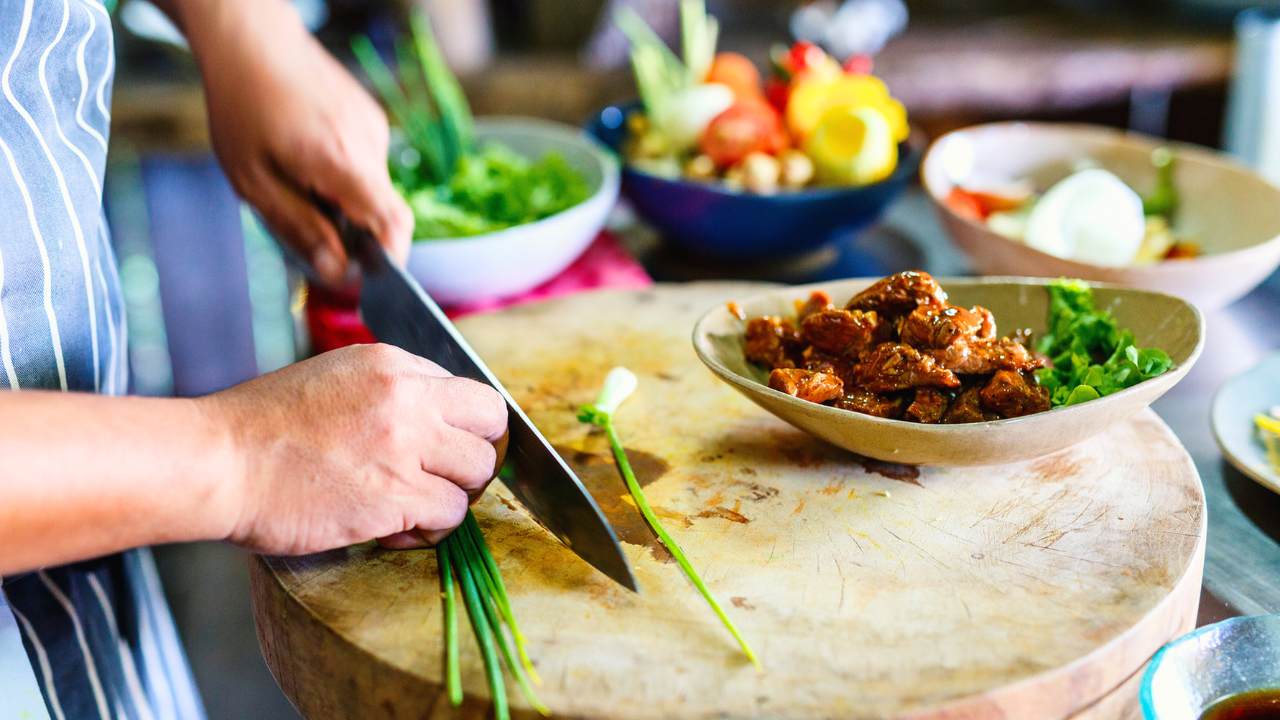
- Traditional cooking methods: Use wood fires, charcoal stoves, mortar and pestle for grinding pastes, and bamboo steamers instead of modern gas ranges and food processors
- Farm-fresh ingredients: Many classes source vegetables and herbs directly from nearby organic farms, with some programs letting you pick ingredients yourself from garden plots
- Hands-on instruction throughout: You do the actual chopping, stirring, frying, and seasoning (guides demonstrate first, then you replicate, not watch-and-taste format)
- Complete recipe collection: Prepare 3-4 full dishes (typically including amok, loc lac, green mango salad, and fresh spring rolls) that represent diverse Khmer cooking techniques
- Family-style dining: Eat the meal you prepared alongside your guide and sometimes the host family, creating genuine cultural exchange over shared food
- Recipe cards to take home: Receive written instructions for every dish so you can recreate Cambodian meals in your own kitchen after traveling
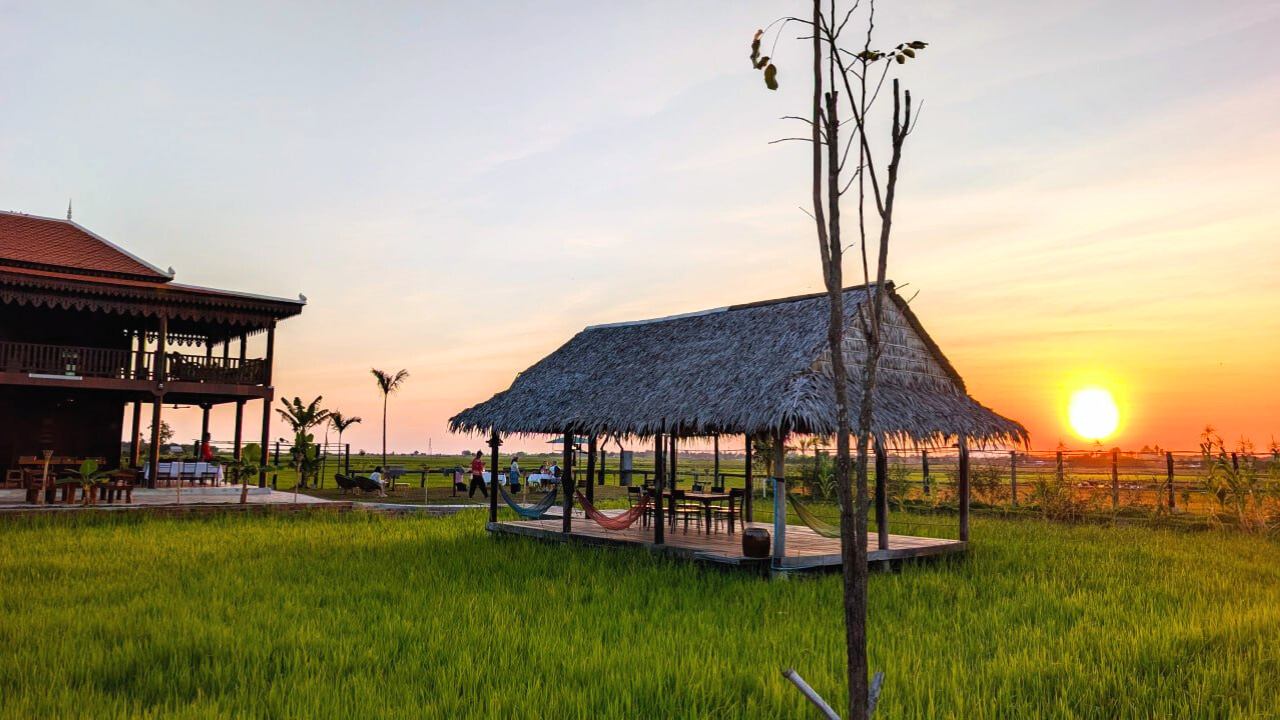
- Sunset viewing often included: Many countryside cooking classes finish with rice field sunset viewing at locations like Baitang, combining two authentic experiences in one afternoon
Class Option:
Half-Day Morning Classes ($35-45 per person, 4-5 hours): Start with 8:00 AM market tour, cook from 9:30 AM-12:00 PM, eat your lunch, return to hotel by 1:00 PM. Best for people with afternoon temple plans.
Booking and Logistics:
Starting points: Most classes pick up from your Siem Reap hotel between 7:30-8:00 AM (morning classes) or 1:30-2:00 PM (afternoon classes).
Transportation included: All options provide tuk tuk or van transport to village locations, markets, and back to your accommodation.
What’s covered: Market tour, all cooking ingredients, cooking instruction, traditional tools and equipment, the full meal you prepared, recipe cards, and transport.
What’s not covered: Drinks beyond water (beer or wine costs extra at some locations), tips for instructors (10-15% standard), and transport for non-participants in your group.
Duration: Classes last 4-5 hours total, with 1-1.5 hours market time, 2-2.5 hours cooking time, and 45-60 minutes eating time.
Remember these practical details:
Pricing breakdown:
- Solo travelers: $50-60 per person (joining group classes)
- Couples: $35-45 per person (group) or $100-150 total (private)
- Families (3-4 people): $140-180 total for private instruction
- Larger groups (5+): Custom rates, usually $35 per person
What to bring: Light, breathable clothes that can get dirty or smoky, closed-toe shoes (outdoor kitchens have uneven ground), hair tie for long hair, camera for photos, small notebook if you want extra recipe notes, and appetite.
Best seasons: Classes run year-round, but green season (June-October) offers the most lush countryside scenery and abundant fresh produce at markets.
Dietary accommodations: Vegetarian adaptations are easy (substitute tofu for meat, use vegetable broth). Vegan requires more advance planning. Gluten-free is harder in Khmer cuisine (fish sauce and soy sauce contain gluten).
Contact information:
- Journey Cambodia Cooking Classes: Book here
- Baitang Siem Reap (for classes ending at sunset location): +855 15 295 940
Booking timeline: Reserve 24-48 hours ahead for group classes, 2-3 days ahead for private instruction (especially during November-February peak season).
Why Cooking Class Siem Reap Countryside Beats City Cooking Schools (Every Time)
I’ve taken cooking classes in probably a dozen countries. Bangkok’s Le Cordon Bleu facilities with their stainless steel kitchens. Tokyo’s spotless cooking studios. Even a fancy cooking school in Barcelona with marble countertops and induction cooktops.
They were fine. Educational. Well-organized.
And completely forgettable.
But the cooking class Siem Reap countryside experience I took three years ago? I still think about it. Not because the facility was impressive (it wasn’t… we cooked under a wooden house with a dirt floor). Not because the equipment was high-tech (wood fire and a wok older than me). But because it felt real.
We started at a market where actual villagers were buying vegetables for their families. Our guide, Sokha, knew every vendor by name. She’d stop and chat in Khmer, laughing at jokes I didn’t understand but could feel the warmth of. When we selected lemongrass, the vendor pulled it fresh from a basket still covered in soil.
That’s the difference right there. City cooking schools buy pre-washed, pre-portioned ingredients from suppliers. Cooking class Siem Reap countryside programs source from the same markets where local families shop. The vegetables were picked that morning. The fish came from ponds you could see from the kitchen. The herbs grew in the garden 20 meters away.
The Dishes You’ll Actually Learn to Make
Let me be specific about what cooking class Siem Reap countryside programs teach, because “Cambodian cooking” covers a lot of ground.
Amok (The National Dish)
This is Cambodia’s signature curry. You’ll learn to make it properly, which means:
The curry paste: Grind lemongrass, galangal, turmeric, kaffir lime leaves, shallots, and garlic using stone mortar and pestle. Your arms will get tired. The paste will smell incredible. This takes 15-20 minutes of actual grinding and pounding.
The coconut base: Mix the curry paste with coconut milk and a bit of coconut cream. Add fish (usually white fish like snakehead) or chicken. Season with fish sauce and palm sugar.
The steaming: Spoon the mixture into banana leaf cups (you’ll learn to fold these). Steam in bamboo steamers over boiling water for 25-30 minutes.
The result: Creamy, fragrant curry with balanced flavors of sweet, salty, sour, and spicy. Eat it with rice.
You’ll take home the exact proportions, so you can recreate this in your kitchen (assuming you can find banana leaves… aluminum foil works as a substitute, though it’s less traditional).
Fresh Spring Rolls
Not fried. Not like Vietnamese spring rolls either (though similar). Cambodian spring rolls usually include:
The filling: Lettuce, rice noodles, bean sprouts, cucumber, herbs (mint, cilantro, basil), and sometimes shrimp or pork.
The wrapper technique: Dip rice paper in water briefly (not too long or it gets too soft). Lay it flat. Add filling in a line across the center. Fold sides in. Roll tightly.
The dipping sauce: Fish sauce mixed with lime juice, sugar, garlic, and chili. This sauce makes or breaks the dish.
The challenge here is the rolling technique. Your first few will probably fall apart. By the fifth one, you’ll get it. This is a dish you can actually make at home easily (rice paper and ingredients are available at Asian grocery stores in most cities).
Beef Loc Lac
This is Cambodian stir-fried beef with a unique serving style:
The marinade: Beef cubes marinated in oyster sauce, soy sauce, and black pepper.
The cooking: Quick stir-fry over high heat (2-3 minutes, keeping the beef tender).
The serving: Beef served over lettuce and tomato slices, with a side dish of lime juice mixed with salt and black pepper for dipping.
The technique: The tricky part is getting the wok hot enough for a good sear without overcooking the beef. Village kitchens use wood fire, which gets incredibly hot if you position the wok correctly.
Green Mango Salad
This introduces you to Cambodian salad philosophy (which is different from Western salads):
The base: Shredded green mango (unripe mango… tart and crunchy, not sweet)
The additions: Roasted peanuts, dried shrimp, shallots, cherry tomatoes, and fresh herbs
The dressing: Fish sauce, lime juice, sugar, garlic, and chili pounded together
The balance: Cambodian salads balance salty, sweet, sour, and spicy in every bite. Learning to taste and adjust this balance is the skill you’re developing.
Why the Countryside Location Makes All the Difference
You can learn these recipes in a city cooking school. The dishes would turn out similar. So why does the cooking class Siem Reap countryside location matter so much?
Ingredient sourcing context: When you buy vegetables at a village market, you see where food actually comes from. That lemongrass? Grown 5 kilometers from here. That fish? Caught this morning from local ponds. The herbs? Growing in someone’s garden. This connection to food sources changes how you think about cooking.
Traditional tools and methods: City schools often compromise with modern equipment for convenience. Village classes use wood fires because that’s how Cambodian families actually cook. You learn to control heat by adjusting wood placement, not turning a dial. That knowledge makes you a more adaptable cook.
Cultural immersion: You’re in someone’s actual village. Kids ride bicycles past while you’re chopping vegetables. Chickens wander near the cooking area. Farmers work in nearby rice fields. This isn’t a staged experience… it’s real life happening around you while you cook.
Pace and atmosphere: Nobody’s rushing. If grinding the curry paste takes 25 minutes instead of the scheduled 15, that’s fine. The chickens aren’t on a schedule. The rice fields aren’t going anywhere. This slower pace lets techniques sink in properly.
Combining Cooking Class with Other Countryside Activities
The smartest travelers book cooking class Siem Reap countryside experiences that combine with other activities. You’re already out in the village area… why not maximize the trip?
Cooking + Sunset Viewing
The Siem Reap Countryside Tour can be customized to include both cooking class and rice field sunset viewing at Baitang.
The schedule:
- 2:00 PM: Pickup and market tour
- 2:45 PM: Start cooking class
- 5:00 PM: Eat the meal you prepared
- 5:30 PM: Transition to nearby Baitang rice fields
- 6:00 PM: Watch sunset over the paddies
- 7:00 PM: Return to hotel
This makes sense logistically (you’re already in countryside, the sunset spot is 10 minutes from cooking locations) and experientially (you’re doubling down on authentic rural Cambodia in one afternoon).
The Afternoon Siem Reap Floating Village Tour can incorporate cooking class elements for travelers who want maximum diversity in one day.
The 3-Day Slow Travel Package includes cooking class Siem Reap countryside as one component of broader cultural exploration.
For active travelers, the Quad Bike Countryside Adventure can be combined with cooking class at the end.
Quick Bite
Cooking class Siem Reap countryside means chopping vegetables under a wooden house, stirring curry over wood fire, and eating what you made while farmers wave hello from rice fields nearby.
My Personal Reflection and What You Should Do Next
Last time I cooked amok at home (about 3 weeks ago), I thought about Sokha explaining how her grandmother taught her to grind curry paste. “If the paste is smooth, the curry is smooth. If you rush the grinding, the curry tastes rushed.” That lesson applies to more than just cooking, you know?
Taking a cooking class Siem Reap countryside isn’t just about learning recipes. It’s about slowing down. Paying attention to details. Respecting the work that goes into feeding people. Connecting with culture through the most universal human activity: eating together.
So here’s what you should do:
Step 1: Pick your format. Standard cooking class if you want focused instruction. Combined options if you want cooking plus other activities.
Step 2: Contact Journey Cambodia to check availability and book your spot.
Step 3: Come hungry and ready to get your hands dirty (literally… curry paste gets everywhere).
Step 4: Take notes, take photos, but also put your phone down sometimes and just be present. You’ll remember the experience better if you’re not constantly documenting it.
The recipes are great. The food you’ll make is delicious. But the real takeaway is the connection to place, people, and culture that happens when you cook alongside Cambodian families in their actual villages. That’s what stays with you long after you’ve forgotten the exact proportions of fish sauce to lime juice.
Helpful Resources
-
Journey Cambodia Cooking Classes: https://journeycambodia.com/tour/siem-reap-cooking-class/ (Direct booking for countryside cooking experiences with village locations)
-
Countryside Tour Combinations: https://journeycambodia.com/tour/siem-reap-countryside-tour/ (Options for combining cooking class with sunset viewing and village tours)
-
Multi-Day Packages: https://journeycambodia.com/tour/siem-reap-3-day-slow-travel/ (Comprehensive itineraries including cooking class as part of broader cultural immersion)