 Skip to content
Discover Non-Temple Sightseeing in Siem Reap – From HeroRATs to Rice Field Sunsets
The Non-Temple Experience You’ve Been Searching For
Non-temple sightseeing in Siem Reap delivers what temple tours can’t: authentic Cambodia. For $48, private tours take you to APOPO’s life-saving HeroRATs (landmine-detecting rats you can actually hold), through working rice paddies where farmers still plant by hand, and to Baitang viewpoint for sunset over endless countryside with local snacks, cold beer, and zero crowds. The Siem Reap Countryside Tour ($35-45) adds village markets, backyard crocodile farms, and fish ponds where kids feed jumping catfish. Both tours end at Baitang Siem Reap, the region’s best-kept secret: a countryside platform surrounded by rice fields where sunset transforms the sky while you sip drinks alongside local families. This is Cambodia without the temple fatigue.
Non-Temple Sightseeing in Siem Reap: Rice Fields, HeroRATs & Real Village Life (2026 Guide)
Introduction
Non-temple sightseeing in Siem Reap means meeting rats that save lives, not climbing your 14th stone staircase. It means watching sunset over working rice fields with a cold Angkor Beer in hand, not elbowing through crowds at Phnom Bakheng. After two days of temples, most travelers suffer what locals call “temple fatigue” — that glazed look when someone mentions another 12th-century sandstone structure. Smart travelers balance their itinerary with non-temple sightseeing experiences that reveal the Cambodia temples can’t show you: village life, countryside landscapes, and the people who actually live here.
1. Why Non-Temple Sightseeing in Siem Reap Changes Your Entire Trip
What You’re Actually Missing (And Why It Matters)
Siem Reap built its reputation on Angkor Wat and 1,000+ other temple ruins. But here’s what guidebooks won’t tell you: those temples represent Cambodia’s past. The countryside represents Cambodia’s present — and it’s way more interesting than your fifth Naga serpent photo.
The numbers tell the story:
- 80% of Cambodians still work in agriculture
- Most families live in wooden stilt houses you pass on the way to temples
- Rice fields cover 3 million hectares of Cambodia
- Yet 90% of tourists never step foot in a working village
Non-temple sightseeing fills that gap. Instead of learning about ancient kings from faded carvings, you meet actual farmers who grow the rice you’ll eat for dinner. Rather than reading about Khmer culture on information boards, you experience it firsthand at village markets where vendors sell fried tarantulas alongside mangoes.
Who Benefits Most from Non-Temple Experiences?
This style of sightseeing rescues several types of travelers:
- Temple-fatigued veterans who’ve seen 12 wats and can’t distinguish Preah Khan from Pre Rup anymore
- Families with kids who need activities more engaging than “look at more old stones”
- Photography enthusiasts chasing golden-hour shots that don’t include 50 other tourists
- Cultural explorers seeking authentic interactions, not staged performances
- Second-time visitors who already did the temple circuit
2. The APOPO Experience: HeroRATs and Real Impact
Why Meeting Landmine-Detecting Rats Beats Another Temple
The APOPO Visitor Center delivers something genuinely unique to non-temple sightseeing in Siem Reap: you’ll meet African giant pouched rats trained to detect landmines and unexploded ordnance (UXO) scattered across Cambodia from decades of conflict.
What makes this extraordinary:
- Cambodia still has 4-6 million landmines buried in its soil
- These HeroRATs detect explosives faster and cheaper than metal detectors
- One rat can clear 200 square meters in 20 minutes (what takes a human with a metal detector 25 hours)
- You can hold one of these life-saving animals in your hands
The 45-minute visit includes:
Orientation (10 minutes) – Learn why Cambodia still faces landmine contamination 50+ years after conflicts ended. Your guide explains current demining efforts and the specific challenges facing rural communities.
Control Point Meeting – Stand at a mockup minefield control point. Understand safety protocols that keep demining teams alive while they work in actual danger zones.
Mock Minefield Tour – See real (deactivated) landmines and UXOs up close. Learn to identify different types: anti-personnel mines small enough to hide in your palm, anti-tank mines that destroy vehicles, and cluster munitions that scatter smaller explosives across wide areas.
Live Rat Demonstration – Watch a trained HeroRAT work. These animals use their incredible sense of smell (better than dogs) to detect TNT and other explosives. When they find something, they scratch the ground. They’re rewarded with bananas and avocados, never punished.
Hands-On Encounter – Hold a HeroRAT. They’re surprisingly docile and friendly (when they’re not working). Kids love this part. Adults usually tear up when they realize these furry heroes have cleared hundreds of square meters where families can now farm safely.
Video Room – A short film shows the devastating impact of landmines on Cambodian communities, and the transformative effect when land is declared “free from explosives.”
Cost: $10 per adult (included in the Sightseeing Siem Reap tour), free for children under 10
Cafe and Shop: Before leaving, grab authentic Khmer coffee (strong and sweet) or fresh juice. The shop sells locally-made merchandise, with proceeds supporting demining operations.
This isn’t passive sightseeing. This is witnessing how innovative solutions save actual lives.
3. Rice Field Sunsets at Baitang: The Viewpoint You Won’t Find on Instagram (Yet)
Where Locals Actually Watch Sunset
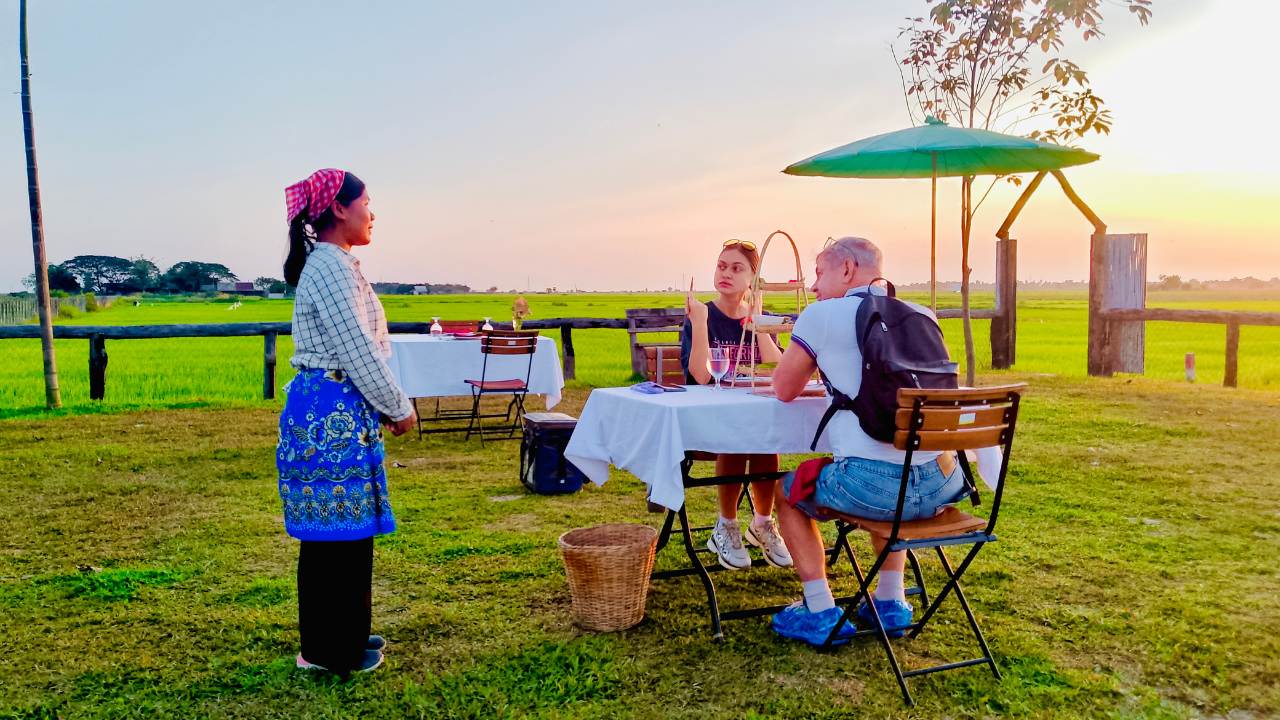
Baitang Siem Reap sits roughly 15 minutes from Siem Reap’s city center, surrounded by working rice paddies that stretch to the horizon. No entry fee. No crowds. No Instagram influencers (for now). Just you, the farmers finishing their day, and one of the most spectacular sunset viewpoints in Cambodia.
What makes Baitang special for non-temple sightseeing in Siem Reap:
Authentic countryside immersion – You’re not watching sunset from a temple with 200 other tourists. You’re sitting on a raised platform in the middle of rice fields where water buffalo graze and farmers plant seedlings by hand.
The views shift with seasons:
- Wet season (May-October): Flooded paddies reflect the sky like mirrors
- Dry season (November-April): Golden harvested fields create texture and depth
- Planting season: Bright green seedlings in geometric rows
- Pre-harvest: Rice stalks turn golden amber as sunset light hits them
Included refreshments – Both the Sightseeing Siem Reap tour and Siem Reap Countryside Tour include stops at Baitang with complimentary local snacks, drinking water, and your choice of:
- 1 local beer per person (usually Angkor Beer, Cambodia’s flagship lager)
- 1 soft drink (Coca-Cola, Sprite, local options)
- Light local snacks (varies by season: dried fish, sticky rice cakes, fresh fruit)
Zero commercialization – Baitang hasn’t been discovered by mass tourism yet. You won’t find souvenir hawkers, aggressive vendors, or tour buses. Just families relaxing after work, local kids playing, and the occasional farmer who’ll smile and wave as they pass on their motorbike.
Photography gold – Sunset transforms Baitang into a photographer’s dream:
- Unobstructed 360-degree views
- Water buffalo silhouettes against orange skies
- Palm trees framing the horizon
- Local wooden houses on stilts
- Farmers returning home along dirt paths
The light here hits different than temple sunsets. There’s more space. More context. More of the Cambodia you probably imagined before you arrived.

4. Village Life: Markets, Crocodiles, and Fish Farms
The Siem Reap Countryside Tour Reveals What Guidebooks Skip
While the Sightseeing Siem Reap tour focuses on APOPO and sunset, the Siem Reap Countryside Tour digs deeper into village life with hands-on encounters that define authentic non-temple sightseeing in Siem Reap.
Here’s what you actually do:
Vegetable Farm Visit
Meet a farmer who grows vegetables using traditional methods passed down through generations. No industrial equipment. No chemical pesticides. Just hand tools, organic compost, and knowledge earned from working this land for 30+ years.
What you’ll see:
- Vegetables most Westerners don’t recognize (but locals eat daily)
- Irrigation systems built from bamboo and plastic bottles
- How families coordinate planting schedules to ensure year-round income
- The actual work required to produce food that sells for $2 at the market
This farmer doesn’t perform for tourists. He’s working. You’re just invited to watch and learn.
Local Market Experience
Forget the tourist-friendly Old Market near Pub Street. This is a village market where locals shop for groceries. No English menus. No haggling performances. Just authentic commerce.
What makes it fascinating:
- Vendors sell live frogs, eels, and fish flopping in buckets
- Snack stalls offer fried crickets, silkworms, and mystery meat on sticks
- Fresh produce displays include fruits you’ve never heard of
- The price negotiations happen in rapid Khmer (your guide translates)
Try local snacks here. The fried crickets taste nutty and crunchy (seriously). The sticky rice cakes wrapped in banana leaves hit sweet and savory notes simultaneously. The fruit vendors will slice whatever looks interesting and hand you samples.
Backyard Crocodile Farm
Yes, a Cambodian family raises crocodiles in their backyard. Multiple generations live here, with ponds full of regular crocodiles and rare white (albino) crocodiles worth thousands of dollars each.
Why families farm crocodiles:
- Crocodile meat sells at premium prices to restaurants
- Skins go to leather manufacturers
- Live crocodiles can be sold to larger farms or exporters
- It’s more profitable than rice farming
Safety note: These families know their animals. Kids grow up around these ponds. Tourists stand behind secure barriers. You’re safe, but the proximity to powerful predators creates genuine excitement missing from temple tours.
Fish Farm Visit
After crocodiles, fish seem almost boring. But watching hundreds of catfish swarm the surface when your guide tosses food creates a feeding frenzy that kids (and adults) find mesmerizing.
What you’ll learn:
- How families stock and maintain fish ponds
- What species grow fastest and sell best
- Why fish farming supplements rice income during dry months
- The economics of small-scale aquaculture in Cambodia
These aren’t fancy operations. These are backyard ponds lined with plastic tarps, stocked with fingerlings purchased at market, and harvested when families need income or protein.
This is Cambodia’s actual economy in action.
5. Recommended Tours for Non-Temple Sightseeing in Siem Reap
Sightseeing Siem Reap: Private Guide, Zero Crowds
If you want life-saving rats, bats erupting from gardens at dusk, and rice field sunset drinks…
The Sightseeing Siem Reap tour delivers premium non-temple sightseeing with private tuk-tuk transport, dedicated guide, and a carefully paced itinerary that ensures you experience each stop fully (not rushed).
Tour highlights:
- APOPO Visitor Center ($10 value included) with HeroRAT demonstration
- Optional Wat Thmey Pagoda (Khmer Rouge memorial stupa)
- Royal Residence and Preah Ang Chek Preah Ang Chorm Shrine
- Bat emergence at Royal Gardens (thousands take flight at dusk)
- Wat Damnak (active monastery with daily monk routines)
- Baitang Siem Reap sunset with drinks and snacks included
Practical details:
- Price: $48 USD per person
- Duration: 4.5-5 hours
- Start times: 1:00 PM (Oct-Feb) or 1:30 PM (Mar-Sep), adjusted for optimal sunset timing
- Included: Private guide, tuk-tuk transport, hotel pickup/drop-off, APOPO entry, water throughout tour, sunset drinks and snacks at Baitang
Who should book this: Travelers wanting the highlight reel of non-temple experiences with premium guidance and no filler activities.
Siem Reap Countryside Tour: Deep Village Immersion
If you want to meet farmers, hold crickets, and see backyard crocodiles…
The Siem Reap Countryside Tour trades APOPO for deeper village encounters. You’ll spend 3-3.5 hours cycling (or riding e-bike/tuk-tuk) through countryside you’d never find on your own.
Tour highlights:
- Vegetable farm with working farmer (not a show farm)
- Local market where tourists are rare
- Family crocodile farm (regular and rare white crocodiles)
- Fish farm with feeding demonstration
- Baitang Siem Reap sunset with drinks and snacks included
Transportation options:
- Bicycle: 6km ride through flat countryside (easy pace)
- E-bike: Pedal-assist for effortless cruising
- Tuk-tuk: Sit back, relax, take photos
Practical details:
- Price: Varies by group size (typically $35-45 per person for small groups)
- Duration: 3-3.5 hours
- Start time: 3:00 PM
- Return: 6:30-7:00 PM
- Included: Guide, transport, hotel pickup, sunset drinks and snacks at Baitang
Who should book this: Travelers wanting maximum authentic interaction with minimal tourism infrastructure. Families with kids who need activity variety. Photographers chasing countryside scenes.
6. Practical Information for Non-Temple Sightseeing
When to Go (Sunset Times Throughout 2026)
Both tours are timed to deliver spectacular sunset experiences at Baitang. Siem Reap’s tropical location (13°24′ N) means relatively consistent sunset times year-round, with only 1 hour variation between earliest (November, ~5:35 PM) and latest (June-July, ~6:30-6:35 PM).
Monthly sunset times:
- January: ~6:00 PM
- February: ~6:08 PM
- March: ~6:15 PM
- April: ~6:17 PM
- May: ~6:23 PM
- June-July: ~6:32-6:35 PM (latest)
- August: ~6:25 PM
- September: ~6:05 PM
- October: ~5:45 PM
- November: ~5:36 PM (earliest)
- December: ~5:40 PM
What to Bring
For countryside tours, pack smart:
Essential items:
- Comfortable clothes (lightweight, breathable, modest)
- Closed shoes (sandals work, but sneakers are better for farm visits)
- Hat and sunscreen (late afternoon sun still bites)
- Camera or smartphone (you’ll want thousands of photos)
- Small backpack for personal items
Optional but recommended:
- Insect repellent (mosquitoes emerge at dusk near rice fields)
- Light jacket (tuk-tuk rides can get breezy after sunset)
- Cash for market snacks or tips (though tours include refreshments)
Visa and Entry Requirements
Before booking non-temple sightseeing in Siem Reap, ensure you have proper documentation:
Cambodia eVisa: Apply online at https://www.evisa.gov.kh/ for $36 USD (plus $6 processing fee). Processing takes 3 business days. Print your approved eVisa and present it at immigration.
Cambodia eArrival: Complete the arrival form online at https://arrival.gov.kh/ before your flight. This speeds up immigration processing and reduces paperwork at airports and land borders.
Visa on arrival: Available at Siem Reap International Airport for $30 USD (bring passport photo and exact cash).
Best Season for Countryside Tours
Dry season (November-April): Best overall weather, comfortable temperatures (though March-April get hot), and easier dirt road access to villages. Rice fields are harvested (golden stubble) or freshly planted (bright green).
Wet season (May-October): Fewer tourists, lower prices, and the most dramatic scenery when rice paddies flood and reflect the sky. Afternoon thunderstorms usually pass quickly. Roads can be muddy but accessible.
Photography recommendation: Wet season delivers the most stunning rice field reflections, but dry season offers clearer skies and more reliable weather.
7. Combining Temple and Non-Temple Experiences
The Smart 3-Day Siem Reap Itinerary
Most travelers benefit from balancing temple and non-temple sightseeing:
Day 1: Angkor Wat, Ta Prohm, Bayon (the must-see temples)
Day 2: Siem Reap Countryside Tour or Sightseeing Siem Reap (reset with village life)
Day 3: Banteay Srei, Beng Mealea, or other outer temples
This rhythm prevents temple fatigue while maximizing diverse experiences. After two days of stone ruins and historical context, your countryside tour feels like meeting the living culture that descended from those ancient kingdoms.
Related Experiences to Explore
Looking for more non-temple sightseeing in Siem Reap? Check out these complementary activities:
- Countryside Sunset Viewpoint Siem Reap – Deep dive into why Baitang outshines every other sunset spot
- Best Rice Field Sunset Siem Reap – Complete guide to timing and locations for perfect countryside photography
- Cooking Class Siem Reap Countryside – Learn to cook traditional Khmer dishes in village settings
- Rural Sunset Tours in Siem Reap – Compare different countryside tour options and sunset locations
8. Why Non-Temple Sightseeing Matters More Than You Think
Supporting Cambodian Communities Beyond Tourism Infrastructure
When you book temple tours, most revenue goes to large operators and the Angkor Enterprise ticket office. When you book non-temple sightseeing in Siem Reap, especially countryside experiences, more money reaches rural communities directly.
The economic impact:
- Village guides earn income supplementing farming revenue
- Local markets see spending from tourists trying street food
- Families operating crocodile/fish farms generate alternative income
- Transportation providers (bicycle rentals, tuk-tuk drivers) benefit
Non-temple tours also showcase Cambodia’s present and future, not just its past. The farmers you meet, the markets you browse, the sunset viewpoints you discover represent the living culture that tourists claim they want to experience (but usually miss because they’re too busy climbing temple stairs).
What Previous Travelers Say
Most reviews for Siem Reap countryside experiences mention similar themes:
- “This was more memorable than any temple we visited”
- “Meeting the HeroRATs was emotional and inspiring”
- “Sunset at Baitang with local beer felt like discovering a secret”
- “The village market was chaotic and fascinating and real”
- “Our kids were bored at temples but loved the crocodile farm”
Non-temple sightseeing delivers what guidebooks promise but temples can’t provide: authentic, unscripted encounters with contemporary Cambodian life.
Final Thoughts: Book the Countryside Before It Changes
Non-temple sightseeing in Siem Reap reveals the Cambodia that exists between ancient ruins and tourist hotels. It’s farmers finishing their day while you watch sunset. It’s kids laughing at your attempt to pronounce “ត្រីឆ្មា” (catfish) at the market. It’s holding a rat that’s cleared 5,000 square meters of land and saved who-knows-how-many lives.
These experiences won’t stay undiscovered forever. Baitang will eventually appear on Instagram “hidden gems” lists. More tour operators will copy the APOPO visit. The village markets will start selling tourist trinkets alongside fried crickets.
Go now, while non-temple sightseeing in Siem Reap still feels like discovering something real.
Book your countryside experience:
- Sightseeing Siem Reap Tour – $48, 4.5-5 hours, includes APOPO + Baitang sunset
- Siem Reap Countryside Tour – 3-3.5 hours, villages + farms + Baitang sunset
Both deliver what temples can’t: the Cambodia you’ll actually remember.